Gay?
Watch what you say in front of Frume Sarah, else you’re liable to be the recipient of a sermon-like rebuke.
This is nothing new. For as long back as I can recall, I’ve been that annoying dinner companion, friend, acquaintance who delievers a lesson on the power of words. Perceive that you were short-changed in some way and refer to the experience as being “gypped,” and you’ll hear all about the Gypsies (now known as the Roma people). Receive a painful admonishment and refer to the source as a “Dutch Uncle,” and you learn how that is one of several stereotypical phrases meant to put down the Dutch.

“Indian-giver,” “Jewed,” “Retard.” If the expression you are using refers to a specific people, culture, religion, disability, etc, you can be certain that it is a put-down.
When I was a kid, the word “gay” suddenly took on a new usage. no longer the vernacular for “happy,” “gay” was used to label someone who was homosexual. The new usage? Stupid. Or dumb. Or uncool. Or. Or. Or. Regardless of the adjective, it was never meant as a compliment. As if the WORST thing a person could be was homosexual. And so the label became an insult.
It was about twenty years ago when that word was tossed about on the school yard. Which is why I was so surprised to hear it used just the other day. “That shirt makes him look so gay,” said the young woman.
really? REALLY?
If you mean the style of the shirt is really effeminate, then say that. (It wasn’t, by the way.) If the shirt had a homosexual slogan on it, then say that. (It didn’t.) If you mean that this kid looked really ridiculous, then say that he looked ridiculous. (He didn’t look ridiculous. The girl walking around in the fairy costime? Now SHE looked ridiculous…) And if you mean that the guy is a jerk, then say that. (Which you typically cannot tell just by looking.)
Words have meaning. They can build up and they can tear down. And in this case, it was my respect that was leveled.
An UNsatisfying Response
 Any position is capable of being supported by justification.
See for yourself:
Dear Frume Sarah,
I received your letter stating your concerns regarding the recent change in program hours at the Early Childhood Learning Center and its impact on the current and future generation of Jews.
The mission of our Jewish Community Center, which extends to the ECLC, includes outreach to the Jewish community at large. It strives to enrich Jewish life through recreational, social, educational and cultural activities. The objective is to strengthen the connection with the unaffiliated and marginally affiliated community, and those who maintain a strong Jewish identity as well.
Plans have been made with conscious determination to provide a Jewish experience on the actual holiday. In a community such as ours, many families work through the holidays. Providing their child with a Jewish experience is considered valuable. What could be more sacred that engaging young children in Jewish learning during the holiday that is not observed by their family.
The JCC respects the individual observances of it’s [sic] staff and would not require any employee to go against their [sic] personal beliefs.
There are multiple points of entry into the Jewish community. This provides an additional opportunity for Jewish exploration and growth.
Sincerely,
Plonit-bat-PlonitDirector, ECLC
It so happens that I am well-acquainted with the mission of the Jewish Community Center, having served as its Director of Jewish Education for nearly two years. So too am I aware that the overwhelming majority of the membership would consider themselves unaffiliated or marginally affiliated. This response make it clear that there is no pretense of observing the letter of the Law. As mentioned in my letter, a change of culture is neither expected nor requested. It is a reconsideration that I seek.
No one has ever said that being Jewish is easy. In fact, observing a Jewish life in a host-majority culture that is decidedly NOT-Jewish requires being different. And making tough choices. While it is true that “providing their child with a Jewish experience is considered valuable,” seeing a parent stay home from work as commanded in the Torah would also provide a valuable and powerful lesson. Keeping a Jewish school closed on days that most parents will be at work is not a convenient policy. Or popular one. It is, however, the right one.
OH…and by the way… you know “”what could be more sacred that engaging young children in Jewish learning during the holiday that is not observed by their family?” Providing the tools that will empower the families to create home observances that are in accordance with our most sacred days.
While the Center does offer multiple entry points into Judaism, apparently religious behaviour is not one of them.
The Coal Miner’s Prayer
**guest post by BossGiraffe
My family moved to Pacoima in January of 1955. By September, they had affiliated with the local congregation, Temple Beth Torah, and it became the hub of our lives. Fellow congregants became my parents’ friends. Between Religious School on Sundays, Hebrew classes on Tuesdays and Thursdays (or Mondays and Wednesdays—depending upon the year), youth group events, Friday night services, and junior congregation, I was in shul nearly every day of the week.
Friday night was temple night. My parents and I were there every week. More than anything else, attending services made me comfortable with my Judaism. I find the same to be true with the youngsters in our own Religious School today. Those who come with regularity on Friday nights feel at home here.
I believe that the words of the prayers, so often repeated, not only were a vehicle for connection with God, they helped to shape my life-long values. One of the reasons the words touched me so deeply was the manner in which my rabbi, Samson H. Levey (a”h), read them. He caressed those words, and made them come to life.
In those days, we used the old Union Prayer Book. It had five different Sabbath Eve services—one for each Friday of the month (even when a month contained a fifth Friday…like tonight!) One particular prayer in Service III was always a favorite of mine. The language was inspiring to a young mind, and the ideals it proclaimed had a lasting effect on how I have approached life. Let me read it to you now:

O Lord, through we are prone to seek favors for ourselves alone, yet when we come into Thy presence, we are lifted above petty thoughts of self. We become ashamed of our littleness and are made to feel that we can worship Thee in holiness only as we serve our brothers in love.
How much we owe to the labors of our brothers! Day by day they dig far away from the sun that we may be warm, enlist in outposts of peril that we may be secure and brave the terrors of the unknown for truths that shed light on our way. Numberless gifts and blessing have been laid in our cradles as our birthright.
Let us then, O Lord, be just and great-hearted in our dealings with fellowmen, sharing with them the fruit of our common labor, acknowledging before Thee that we are but stewards of whatever we possess. Help us to be among those who are willing to sacrifice that others may not hunger, who dare be bearers of light in the dark loneliness of stricken lives, who struggle and even bleed for the triumph of righteousness among men. So may we be co-workers with Thee in the building of Thy kingdom which has been our vision and goal through the ages. (Union Prayer Book I, page 45)
By the time I was in rabbinical school, the Union Prayer Book was found lacking by many in our Reform Movement. The language was archaic and the readings did not seem relevant. The passage I just cited that had been so meaningful to me was now derided as “the Coal Miner’s Prayer.” We often supplemented the prayers in that siddur with more contemporary writings. When Gates of Prayer was published in 1975, most people enthusiastically endorsed it, and the Union Prayer Book was happily consigned, figuratively, to the ash-heap of history.
I hadn’t thought of that prayer from the Union Prayer Book for years…until the sad news broke on April 5 of the worst mining disaster in four decades. All of sudden, the words that we thought were outdated came to life: “How much we owe to the labors of our brothers! Day by day they dig far away from the sun that we may be warm,…”
While it is true that most of our houses here in Southern California are heated by gas or electricity, coal does remain a crucial product in our nation’s economy. The history of the coal mining industry is not one of which our country can be proud.
Over the years, I have introduced important religious ideas to the members of our Confirmation Class by having them answer a series of true-or-false questions. Here is one– True-or-false: Religion has no right to tell people how they should run their businesses. If your initial inclination is to say true, it is clear to me that you have never studied the words of the Prophets in our Bible. They often decried the unjust treatment of the poor by those in power.
The loss of 29 lives in the Upper Big Branch coal mine, owned by the Massey Energy Company, was only the most recent in a long line of mining disasters caused by coal operators ignoring government safety regulations, considering them an intrusion on their right to maximize their profits. Widespread safety violations at Massey mines have been reported. In one internal memo, the man who runs Massey warned his mine managers that they were to ignore any directive “to do anything other than run coal….” He went on to state, “This memo is necessary only because we seem not to understand that the coal pays the bills.”
Over the past many decades, the Central Conference of American Rabbis and the Union for Reform Judaism have passed numerous resolutions on the issues of workers’ rights and worker safety. They are rooted in the principles of our prophetic tradition and the teachings of Jewish Law.
In his eulogy this week for the miners whose lives were taken in the disaster, President Obama declared, “We cannot bring back the 29 men we lost. Our task, here on Earth, is to save lives from being lost in another tragedy. To do what must be done, individually and collectively, to assure safe conditions underground. To treat our miners the way they treat each other—like family.”
On this Shabbat, may we be reminded that we can worship God in holiness only as we serve our brothers and sisters in love. We, indeed, owe so much to the labors of others. Acknowledging this, may we enthusiastically take up the struggle to assure that safety is protected and justice procured for all those who willingly give of themselves for our wellbeing.
KAYN Y’HI RATZON! (May this be God’s Will.)
Silly Rabbi…
It’s really a wonder that I’ve been able to pursue higher education given my natural tendancy towards sheer ditziness.
Case in point:
A couple in their 70’s approached our information booth at yesterday’s Israel Expo. After chatting with them for a few moments, it was clear that they wanted to receive regular information about upcoming events. The woman asked if she could give me her business card. While she was digging around in her purse, the husband posed a question.
Man: May I have a kiss?
Sounds weird, right? Except I cannot count the number of times men, typically older men, comment that they’ve never had a kiss from a lady rabbi. It’s a generational thing and the comments don’t really bother me.
Not wanting to appear unfriendly or prudish, I leaned in and gave a soft kiss on his cheek.
Man (gesturing to the bowl on the table): Um…I meant a chocolate.

Six Little Words
watch•word \wäch-wərd\ n (15c) 1 : a word or phrase used as a sign of recognition among members of the same society, class, or group 2 a : a word or motto that embodies a principle or guide to action of an individual or group : SLOGAN b : a guiding principle
I recently asked a room full of students if they could give me a definition of the word “watchword.” They couldn’t. After several awkward moments, a couple of the older students were able to mumble something that was in the vicinity of “slogan,” but it was clear that no one was able to provide a straightforward answer.
“We now declare the watchword of our faith.”
How many times have we heard this word used to describe the Sh’ma? How many times have we heard this word used to describe the Sh’ma and wondered what it really means?
1 : a word or phrase used as a sign of recognition among members of the same society, class, or group
The first line of the Sh’ma is often the first prayer that we learn. Traditionally recited upon retiring at night and rising in the morning, it is not surprising that even the youngest child knows the Sh’ma. One of the most moving parts of a conversion ceremony is when the candidate, embracing the Torah in his or her arms, proclaims the Sh’ma. It does indeed indicate membership in our Tribe.
2 a : a word or motto that embodies a principle or guide to action of an individual or group : SLOGAN
Those six Hebrew words comprise the core belief of Judaism; Listen, O Israel, the Eternal our God, the Eternal is One. One God. Our God. And, by implication, we are God’s People. This is how we see ourselves. In relation to the One God.
2 b : a guiding principle
The Sh’ma is the constant reminder we have of God’s Presence in our lives. Twice a day, at the very least, we declare our creed. It’s not for God’s Sake, but for our own. We need the reminder so that we conduct ourselves as is befitting of a people in Covenantal Relationship with the Holy One.

As we make our way through the days of Iyar and into the month of Sivan, we prepare ourselves to renew that Covenant. May our days be guided by those six Hebrew words.
Hyperbolic Nonsense
Here we go again. Looking for Jewish connections in the wider culture in order to prove that we are just like everyone else. Or even better, causing others to emulate us.

A house is not a home. Remember that great Burt Bacarach song? A house is not the same thing as a home. It requires the intent.
Just as a circumcision not necessarily a bris. It too requires intent.
A circumcision is a medical procedure used to remove the foreskin of the penis. Any penis. Jewish penis. Christian penis. Muslim penis. Agnostic penis. Atheist penis. Polytheist penis. There is no religious implication in this medical procedure. A bris (or brit or brit milah), on the other hand, is a Jewish ritual that elevates the medical procedure by answering the call of commandedness. Genesis 17:7-14. God commands Abraham to circumcise his son on the eighth day of life as an eternal sign of the covenant – the בְּרִית brit – between God and Abraham. Furthermore, it is a commandment that is a chukat olam – a law for all time. In every generation, every Jewish male child must be circumcised in accordance with our Tradition.
The Jewish professional responsible for the procedure is called a mohel (or mohelet, female). From the Hebrew root meaning “to cut foreskin (to circumcise,” the mohel is trained in the medical AND ritual aspects of the ceremony. Regardless of who is being cut, the cutter is always a mohel.
However, when a mohel performs a circumcision on a non-Jewish baby, which is in no way a violation of Jewish law, no bris has taken place. A circumcision has taken place. Since the days of Queen Victoria through HRH The Prince of Wales, royal male babies were circumcised by a mohel. A good decision given that mohels have a great deal of practical experience with circumcisions. No one has ever suggested that these Royal babies have been entered into the Covenant.
So while it made for splashy, attention-grabbing headlines today, Sandra Bullock’s baby did not have a bris. He was circumcised by a specialist.
Passing the Choral Torch
One of my most formative and life-altering experiences happened in a church.
It’s true.
1980. The high school choir concert. Judas Maccabeaus. I had always loved music. But this was amazing. Big kids. Cool kids. Making shimmering, glittering, triumphant music. That one night planted the choral seed. And ignited my passion love for Georg Friedrich Händel as well as the oratorio.

Has any student anticipated joining the choir more than that awkward girl?
From that point, my most treasured, and painful, moments were spent in choir. School choir. District choir. All-county. All-state. Choir camp. You name it…I sang it. For fourteen years. And it all started when I walked into the music room at my elementary school and the music teacher told me that I was an alto. [Which was later changed when it became clear that I was many things. An alto was not one of them.]
Now, I am the parent of a fourth grader. In the same district of my childhood. Same, but with a significant difference…
My, how the mighty have fallen. It is hard to believe that a once-flourishing music program has been reduced to a limping shadow of its former self. Barely recognizable. The repeat victim of budget cuts.
Gone are the days of an individual vocal music program in each school for grades fourth-eighth. Gone is the All-District Chorus. Gone are the trimester concerts. Gone. Gone. Gone.
One annual concert. For a chorus comprised of fourth grade students from eight elementary schools in the district. One combined group. With no rehearsal. Organized by height, singing to pre-recorded music.
That’s it. That is the entirety of the elementary school music program in our district. It reappears in middle school with another combined group, run by the conductor of the local high school vocal music program.
When music isn’t valued at the elementary level, the high school program is negatively impacted. The caliber cannot possibly be maintained without a strong feeder program. Ultimately, this impacts any student who desires pursing a music degree at the college level.
It is true that every generation tends to romanticize the past while criticizing the present. So it would be unreasonable to expect my generation to be immune from the tendancy to gloss over the imperfect past.
But this really is pathetic.
What type of valuable musicality can be taught under these conditions? The music teachers deserve a great deal of credit as they attempt to impart their love and knowledge. And gratitude to the community for financially supporting the music program. Such that it is.
The following elementary choral sins were committed last night:
- Outdoor concert…with no acoustic shell
- Keys too high for young voices ==> flat notes.
- Ten songs. None of the students learned all of the words to all of the songs. Better to have fewer songs.
- Key changes in every song. Usually an indication of an uninteresting setting. And if the keys are too high in the beginning…
- Conducting in the wrong time sig. A conductor who only conducts in 2??? Most of these pieces were written in 4. Learn to feel it in 4, Mr. Conductor.
But Beernut loved it. He doesn’t have my memories of a strong music program. He has only his own experience. Which, as far as he is concerned, was a wonderful, joyful one. And so it shall remain.

Honour Thy Mother
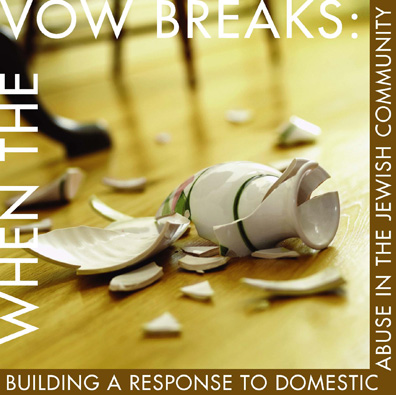
Where will you be this Mother’s Day?
At home? The dayspa? Brunch at a favourite restaurant? Or in a shelter for abused women?
More than 30,000 women will spend Mother’s Day in a Battered Women’s Shelter.
Those are the lucky ones. The women with the strength to flee the perceived safety of their homes and leave behind their abusers.
How many more women will spend Mother’s Day trapped in a violent relationship?
For the 12th consecutive year, Jewish Women International is encouraging people to honour the mothers in their lives by supporting the Flower Project. Contributing to the Mother’s Day Flower Project is a wonderful mitzvah that combines social justice and education with celebrating Mother’s Day. For each $25 donation you make to the Mother’s Day Flower Project, JWI sends out a beautiful Mother’s Day tribute card to a designated honoree thanking her for inspiring you to give. Your generous gift enables JWI to send bouquets of flowers, as well as beauty products from OPI Products, Inc. to 150 shelters across the United States. Your contribution to the project also funds critical JWI programs that work every day to help battered women navigate the legal system; train women and girls to value and protect themselves; fascilitate healthy relationship programs for teens; establish children’s libraries in shelters across the country, and much more.
Please consider honouring the mothers in your life by supporting the work of JWI.

Sorely Disappointed

Poor Frume Sarah. Another day, another cause for vexation.
Dear Parents,
With the focus on providing additional opportunities for Jewish life and community participation, the leadership of the So-and_So Jewish Community Center approved the extension of hours on Shabbat and the Jewish holidays. We are delighted by the positive impact this decision will have on the preschool.
Our new holiday schedule begins in September at the beginning of the 2010/2011 school year. The expanded days include the first two days of Sukkot, Shimini Atzeret, Simchat Torah, Passover and Shavuot. These days will be included in the schedule for our full day and ITC students at no additional charge. Half day and plus day students will have the opportunity to register for holiday activities.
In addition to the added convenience for working parents, we will have the opportunity to celebrate holidays together and explore their deeper meanings. Image your child shaking the lulav and etrog on the first days of Sukkot; marching around the campus with our own “Torahs”, and eating our first Matzah together on Passover. With the opportunity to experience the essence of each special day through sensory activities, stories and celebration, these days will be designed to help our children feel the spirit and beauty of our holiday traditions.
We look forward to the celebration of these holidays with our JCC community.
Shalom,
Plonit-bat-Plonit
Director, ECLC
Dear Plonit-bat-Plonit,
I imagine that yesterday’s email regarding the Holy Day openings was received with a great deal of relief by most of the working parents in the school. After all, there are only a handful of us who observe the prohibition of working on the Shalosh R’galim. And while it certainly makes life just a little easier, I am deeply troubled by the message that is being sent to our youngest generation of Jews and their parents.
How ironic that the decision to open the ECLC (Early Childhood Learning Center) on the Chagim is being communicated in the very week that the Torah portion (Parashat Emor) includes a clear injunction against work on the Festivals. “On the first day you shall celebrate a sacred occasion: you shall not work at your occupations…The seventh day shall be a sacred occasion: you shall not work at your occupations (Lev. 23:7-8).”
Keeping a Jewish preschool open on these sacred days clearly contradicts the mitzvah regarding work and fails to model proper Jewish behaviour. All of the activities described above can most certainly occur during Chol HaMoed or, in the case of Shavuot, in the days immediately preceding the Chag. And what is to become of the Jewish employees? Will they be expected to work on days when work is forbidden? Whether or not a Jewish employee chooses to observe Halacha is a private matter. However, a Jewish employer requiring a fellow kinsman to work on Shabbos or Yom Tov is a clear violation of Jewish Law.
It would be unreasonable, given the history and culture of the JCCA, for a JCC to adhere to the strictest letter of the Law. However, I do expect it to create a culture that upholds the spirit of the Law. As Rabbi Isaac Klein points out (A Guide to Jewish Religious Practice, 96), “the festivals are the moments of exultation that dot the Jewish year and elevate it from domination by the workaday world.” The recent choice to extend the Fitness Center hours on Shabbos to match the hours on Sunday suggests that Saturday is regarded as just another weekend day. Similarly, opening the Center on some of the most sacred days of our year suggests that they are seen as another other day.
I am profoundly disappointed in this new policy, having long been proud that our Jewish Community Center kept the “J” at the center of its mission, and would urge the leadership to take a deeper look at this matter.
Sincerely,
Frume Sarah
B’Chol Dor VaDor
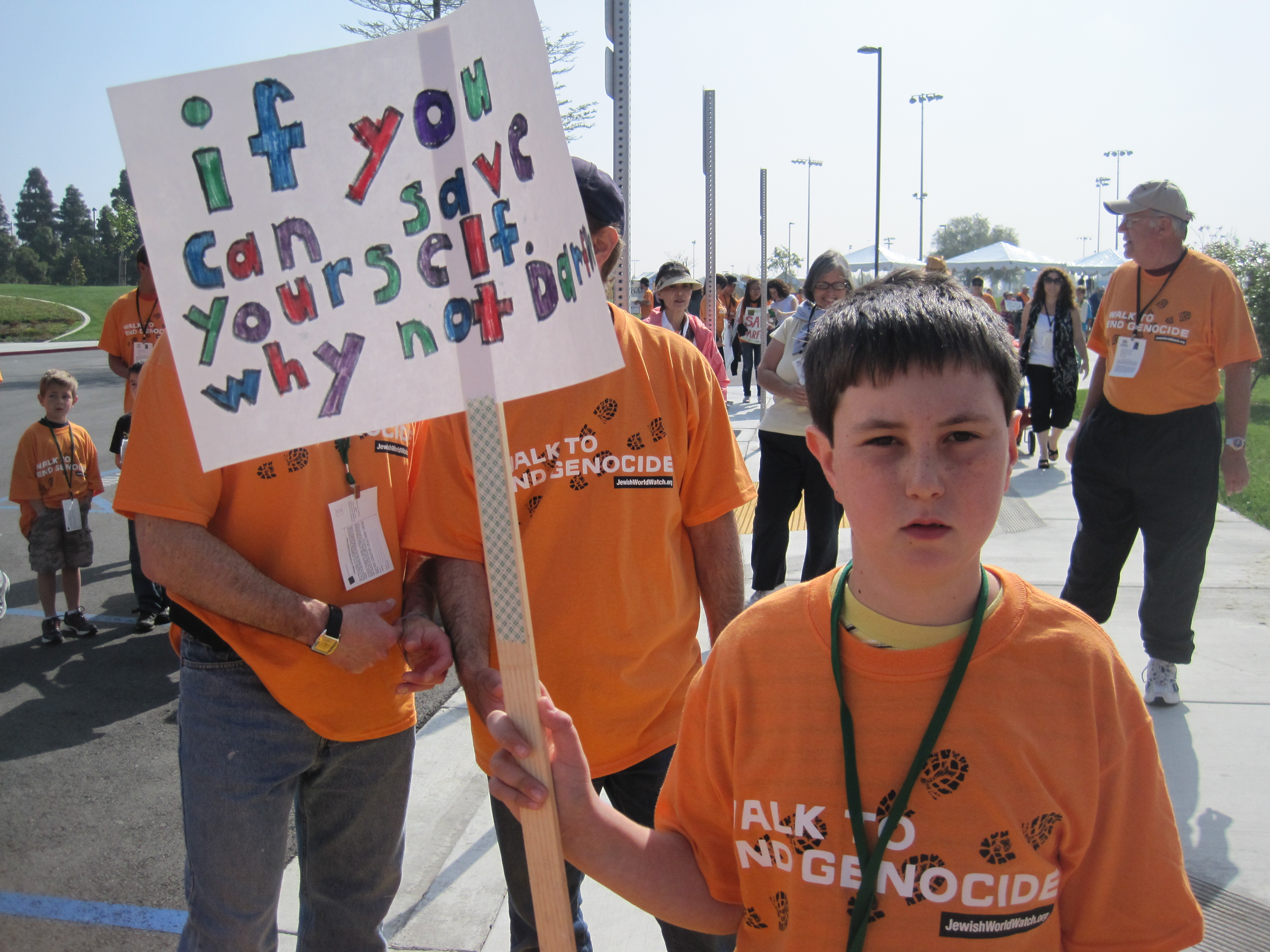
FrumeSarah: You guys remember that we have the Jewish World Watch Walk to End Genocide on Sunday in lieu of Religious School, right?
Beernut: Ri–ight. For Darfur. Why doesn’t our President do something?
Poppyseed: Yeah. They’re people just like us. And we know what it’s like. I mean because of Pharaoh.”
Children,
I love that you still believe that the United States is powerful enough to end injustice in this world. That your faith in the President (the office of the President) is so sure. That you sense a connection with people vastly different in colour, race, faith, and culture from you. And that you recognize that the enslavement of our people so long ago binds us to the vulnerable as we seek for them the liberation we enjoy.
May you rear children in a world that is free from the senseless destruction of innocents.
Love,
Mom

 Frume Sarah is Shabbos-observant -- in a Reform way, that is. Please note that from Friday afternoons until one hour after sundown on Saturday evenings, Frume Sarah will be unavailable, in observance of the Jewish Sabbath.
Comments made during this time will be held in a queue, to be moderated afterwards.
Thank you for your understanding...and gut Shabbos!!!
Frume Sarah is Shabbos-observant -- in a Reform way, that is. Please note that from Friday afternoons until one hour after sundown on Saturday evenings, Frume Sarah will be unavailable, in observance of the Jewish Sabbath.
Comments made during this time will be held in a queue, to be moderated afterwards.
Thank you for your understanding...and gut Shabbos!!! 


 Frume Sarah's World