Gimme a Break
 Did you happen to catch the article about clergy burnout in today’s Times?
Members of the clergy now suffer from obesity, hypertension and depression at rates higher than most Americans. In the last decade, their use of antidepressants has risen, while their life expectancy has fallen. Many would change jobs if they could.
I’m discouraged just reading this.
The article goes on to describe how the commitment folks of the cloth feel towards their congregations and their calling often prevents them from caring for themselves.
I can relate. I am not good at carving out “me” time. I know that having young children makes it even more difficult to seek spiritual restoration.
The Catholics have the right idea. According to the article, Catholic canon law requires its priests to take a four week vacation in addition to a month devoted to a spiritual retreat. Of course, those guys don’t have to juggle familial logistics.
I am one of the guilty ones. I rarely use all of my vacation time and when I do take vacation days, it is typically to be with the kids during one of their breaks during the school year. Not exactly relaxing. Nor do I take all of my time at once. The shul doesn’t want both rabbis away at the same time so, with just a few special (and SHORT) exceptions, we stagger our time.
I don’t see this changing any time in the near future, though I do think that reexamining the expectations we have of our rabbis might have positive benefits for both a congregation and a rabbi.
Reverend Peter Scazerro, who was quoted in the article, has put together a set of guidelines for the pastoral team members of his church. As one might expect, it is written from a deeply Christian perspective. Some of the language sounds unfamiliar. But there is much that can and ought to be adapted for the rabbinic community.
With Elul just around the corner, it’s time for New Year’s “resolutions.” I’m thinking these Rev. Scazerro’s guidelines might come in handy as I imagine a better version of me in 5771.
Progress
When I tell my children how different life was when I was a kid, they marvel at the hardships. How is it possible that we managed with just a handful of channels? I try explaining that you knew you had stayed up too late when the Star-Spangled Banner was played and then the screen was filled with noisy “snow” until the start of the next day. They cannot really imagine what it was like without hundreds of television channels available every hour of every day. And though there has been much progress in my almost thirty-nine and a half years, it simply does not compare to the technological advances of the past ninety-nine years.
In 1911, aviation was at its infancy. The first airplane to land on a ship was piloted by Eugene Ely, the first official air mail was delivered, and the first non-stop London-Paris flight was completed. It took another three decades before the airline industry really took shape and it was still some time before commercial aviation became commonplace.
Tremendous advances in the automotive industry took place in 1911. Charles Kettering patented the electric starter. Good news as it eliminated the need to crank up the old Model-T before taking a spin. Speaking of which, Chevrolet appeared on the scene that year, giving Ford a run for his money.
Fashion has changed. So has music and the arts. Every single aspect of life has been propelled forward at what now must seem like an alarming speed.
PC’s grandmother been observing all of these changes for the past ninety-nine years. Today, we celebrated with her…and wished her ad meah v’esrim.
Happy Birthday, Mom-Mom. May we celebrate with you for another twenty-one!
{{Translation}}
Say what you mean and mean what you say. If you are going to be rude, disrespectful, or offensive, go ahead and say it.
Of course, one doesn’t actually need permission. At the very least, avoid obfuscation. Because you’re not really fooling anyone.
Remember, attempting to be less offensive is still being offensive. I offer a few examples of doublespeak to illustrate.
“To be honest…”
Translation: This opener might lead one to believe that the speaker is about to bare his or her soul opposed to other conversations when the speaker is not being as honest as one might believe. Causing the listener to wonder if he or she has been lied to in all previous discussions. It also gives the impression that the listener is about to be privy to some confidential information as in “To be honest,” as the listener leans in with anticipation, “I truly believe that you just don’t have an accurate sense of reality.”
“With all due respect…”
Translation: It’s the “all due” that gives it away. When you really respect someone, you speak in a respectful manner. It’s when you actually have little to no respect that you’ll rely on this as in “I don’t respect you in the slightest, but need to throw a bone in your direction before I slam you.”
“You’re very [insert backhanded compliment of your choice], BUT…”
Translation: The more I build you up with a perceived compliment, the harder you’ll fall when I follow up with an insult. As in “you’re a very smart person…but you don’t have the slightest clue what you are doing and now I am going to tell you how to do that for which you were hired.”
“Don’t get me wrong…”
Translation: Serving as a structural buffer, this phrase almost ALWAYS occupies the space between what might be (correctly)perceived as an insult and clause meant to be either neutral or a compliment. As in “Everyone else thinks your haircut is just awful; don’t get me wrong, I think it is very well-suited for your facial structure.”
Yes, Miss Scarlett, tomorrow is another day.
Love is in the Air
 With the Tu B’Av (the Jewish equivalent of Valentine’s Day) having been observed this past week, Amy over at Homeshuling asked several of us in the Jewish parenting blogosphere to share our favourite Jewish love song.
There are a lot of choices and a lot of Jewish love songs that I really, really like.
But my hands down favourite is…
Mitachat LaShamayim (Under the Sky) — David Broza
I first heard this song my first month in Jerusalem. It was summertime. There was something so sensual about both the lyrics and music. It reminded me of Sting‘s Field of Gold. Which I heard him play that same year at Sultan’s Pool.
What about you? What’s your favourite Jewish love song?
I Get It!

A new writers’ collective is in town. It’s called Smartly and, to quote their tagline, it’s for “people who get it.”
I’m one of the writers for the local site and my first essay was posted today. Take a look.
Re-Entry

We’ve been home just thirty-six hours and are still readjusting to life away from camp.
Especially in the sleep department.
7:30pm is “Lights Out” at Beit Frummie. Let’s just say that the Littles rarely made it to be before 10:30pm. And Peach stayed up until 1:00am on our final night.
Also, meals no longer just appear. I have to actually make them happen here at home. Another drawback.
It is certainly much quieter without the other six hundred campers and nearly 200 staff members. Not as much ruach, though.
{{sigh…}}
Ha-Ha-Ha-Hagigah
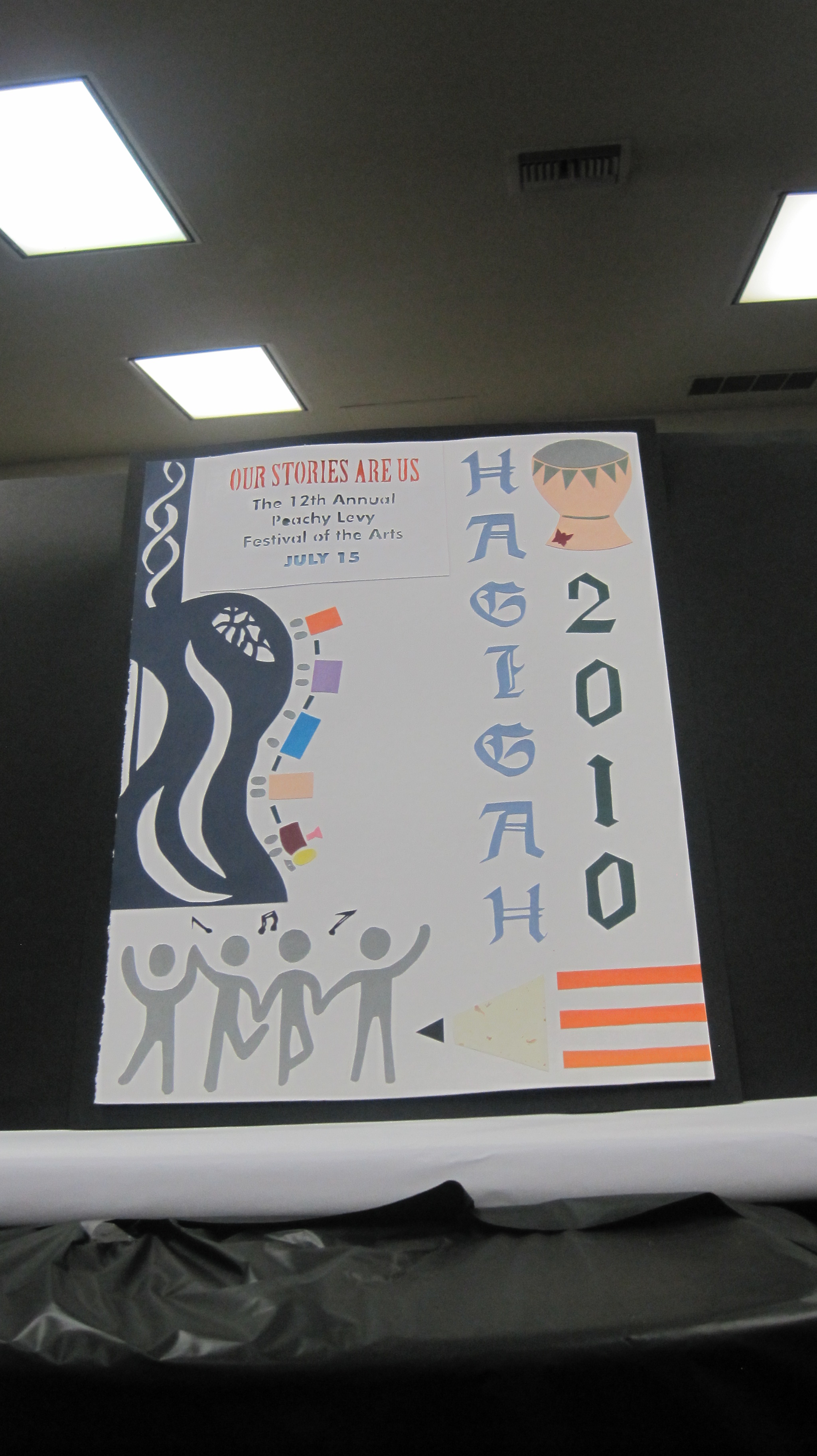
Imagine being given all the tools you need to become an artist. Visual, performance, whatever you have always wanted to try.
Imagine being given the confidence that you are already an artist.
This is Hagigah. For almost 50 years, Hagigah has been inspiring Jewish artists. For a major part of each day, 10th and 11th graders have the opportunity to learn and study with distinguished Jewish artists in a relaxed, exploratory atmosphere . At the end of the four weeks, the visual and performing art yitzirot (art workshops) culminate their experience in the Peachy Levy Festival of the Arts celebrating their work.
Just a few images to whet your appetite:
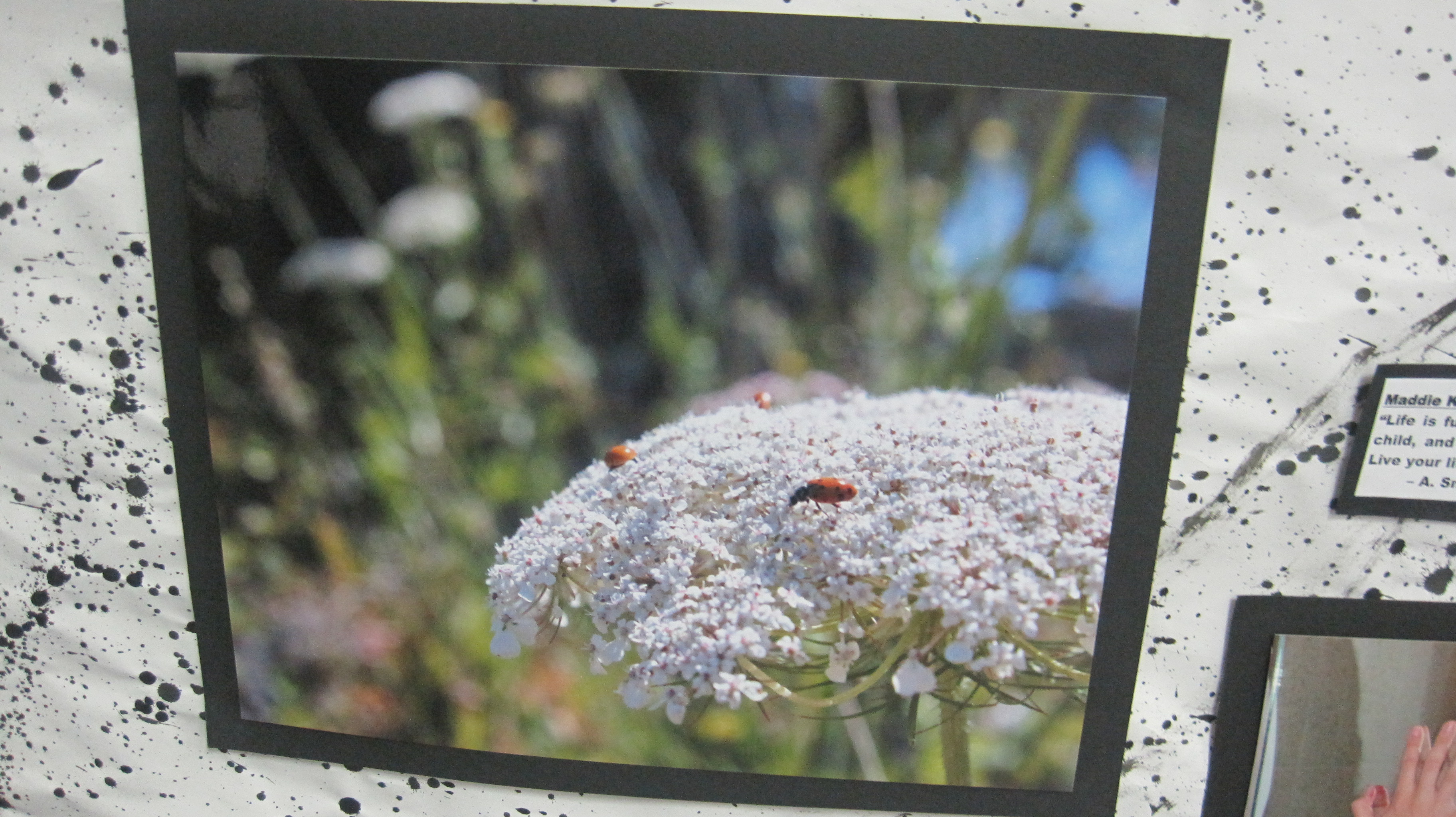



A complete write-up of the Festival can be found here.
Rules: Made to be…
 I’m a rule girl. I like to know what is expected of me and I appreciate being provided with a rubric meant to keep me on task. Grammar aside, I was grateful to receive the following handout at our staff meeting on the first day of camp.
Guiding Principles for Parents with Day Campers and for Staff parents
The following are some guilding principles to help you enjoy your time at camp and to help create “shalom bayit” for your camper, their cabin, and their eidah. The basic idea is to allow you to have reasonable contact with your child, but also respect the sacred space of your child’s group.
Staff parents may connect with their children in the following ways:
- Campers may visit parents at meals, but need to come to the parent table (parents may not visit campers at the camper table)
- Passing by, like going into or out of a meal, by the entrance (again, avoid visibility at camper’s table)
- Passing by, like all camp Shabbat services, dancing, singing
Parents must respect their camper’s space in the following ways:
- Parents may NOT visit campers bunks/living spaces
- Parents may NOT visit campers meal tables
- Parents may NOT visit campers programs, closing circles, cabin or eidah time.
If a parent has any concerns, they should ONLY speak with the Rosh, unit head, never directly with the counselor unless set up by the Rosh.
For Day Campers, the day camp experience runs from breakfast through siyum, closing circle. It is the parents responsibility to drop off their camper at the dining hall and then arrange with the Rosh to pick them up from the dining hall after siyum (a staff member will bring day camper to dining hall after siyum — do not go to cabins). At times, certain day campers might need breaks, like menucha/personal nikayon — in these cases, please establish the logisitics with the Rosh directly.
Perfect. Now I know the boundaries and when questioned by my kids. I’m not a mean mom; I’m simply following the rules.
So when Poppyseed woke up yesterday with a stomach eppes, I assumed that she would stay up in Faculty Row until she recovered. However, when I mentioned that Poppyseed had a fever (101.6F) to one doctors, I was asked to bring her to the mirpa’ah. Fever alone was reason enough to remove her from the general population; the diarrhea sealed her fate. Poppyseed, I was told, would need to remain isolated until fever-free for twenty-four hours.
All day long people asked me how she was doing and all day long I replied, “I don’t know.” “Haven’t you been to see her?” they asked. “Of course not. Other kids don’t have access to their parents when they get sick at camp. Poppyseed should be no different.”
Until the end of the day. When I was unceremoniously informed that day campers are not permitted to stay overnight in the mirpa’ah. Despite the fact that she had been spiking fevers as high as 102.6 and her diarrhea had required a costume change, she could not stay in one of the MANY available beds in the infirmary. Since Poppyseed had been unable to stomach anything more than an Otter Pop and a little water, I doubted she’d have the koyach to make it up to Faculty Row. [There are a LOT of hills here.] I drove down to fetch my fever-riddled daughter and her accoutrement [bagged clothes (the costume change), stuffed animals, and a get-well card from her cabinmates].
She has recovered from what was probably a 24-36 hour bug, Puh X 3. But I am at a loss with the way in which this was handled. Is it possible that the Camp is only concerned with the well-being of a Day Camper from breakfast to siyum?
So much for following the rules…
Letting Go
Mom, can you help me?

What it is that is being asked?
Is it “Mom. I’m not sure how to do this?”
Or “Mom, can you do this for me?”
Or possibly, “Mom, I’m not ready to be the big kid and still want some reassurance that you are still available for the hard stuff.”
So when Beernut approached me in the Chadar Ocheil (dining hall) with “Mom, can you help me?”, I panicked. Which question was he really asking.
“Nope,” I said, wondering how he would respond.
“OK.” And he walked off.
I presume that either he found the answer on his own or he suckered someone else into completing the task. Either way, I was not the middle man.
The process of growing up involves a great deal of growing away. Away from one’s parents and away from the safety of childhood. Sometimes, one can actually feel the tugging as the child pulls away. Unlike the more rapid process of leaving an actual nest, human development happens in fits and starts. Which is a good thing because it would be much more painful of a separation for both mother and child if it happened any more quickly.
Every once in a while, I remember that the main goal of parenting is to help our children grow and develop and leave us. And then I push that thought away so that I don’t cling protectively to my children. And then I sigh.
It Takes Only One
“What if I’m the youngest kid?”
“What if no one likes me?”
“What if I don’t make any friends?”

For the past few years, Poppyseed has been too young to be in session while up at JewCamp. She happily spent her days in Camp Katan — the day camp for Faculty kids who are not yet old enough to be attached to a cabin. This year, Poppyseed is too old for Katan, yet not quite old enough to stay in a cabin. The solution?? Day camper. From Aruchat Boker (breakfast) through Hashkevah (cabin activity meant to quiet down the campers), day campers are with a cabin and participate in all activities. This option is available only to the Faculty and Staff kids.
Poppyseed is a year younger than the youngest campers here right now. So this was the only option available to her. But she worried that as the youngest kid, the other girls wouldn’t want to hang out with her.
Not to worry, Poppyseed. You only needed to connect with one other person to feel comfortable. And right away you found a friend. Remember, it takes only one.

 Frume Sarah is Shabbos-observant -- in a Reform way, that is. Please note that from Friday afternoons until one hour after sundown on Saturday evenings, Frume Sarah will be unavailable, in observance of the Jewish Sabbath.
Comments made during this time will be held in a queue, to be moderated afterwards.
Thank you for your understanding...and gut Shabbos!!!
Frume Sarah is Shabbos-observant -- in a Reform way, that is. Please note that from Friday afternoons until one hour after sundown on Saturday evenings, Frume Sarah will be unavailable, in observance of the Jewish Sabbath.
Comments made during this time will be held in a queue, to be moderated afterwards.
Thank you for your understanding...and gut Shabbos!!! 


 Frume Sarah's World